The 10 to 20 Percent Check Size Bump Kerala Restaurants Are Leaving on the Table
Indian restaurants report 10 to 20 percent higher average bills after switching to digital menus. Here is the ROI math for Kerala restaurant owners, line by line.
Indian restaurants report 10 to 20 percent higher average bills after switching to digital menus. Here is the ROI math for Kerala restaurant owners, line by line.
Previous article
Kerala welcomed 25.8 million tourists in 2025, yet most restaurant menus speak one language. Here is how multilingual QR menus turn that traffic into revenue.
Next article
A Kerala restaurant serves a puttu breakfast crowd at 7 AM and a tourist dinner crowd at 7 PM. Most still run one printed menu for both. Here is the case for daypart menus.
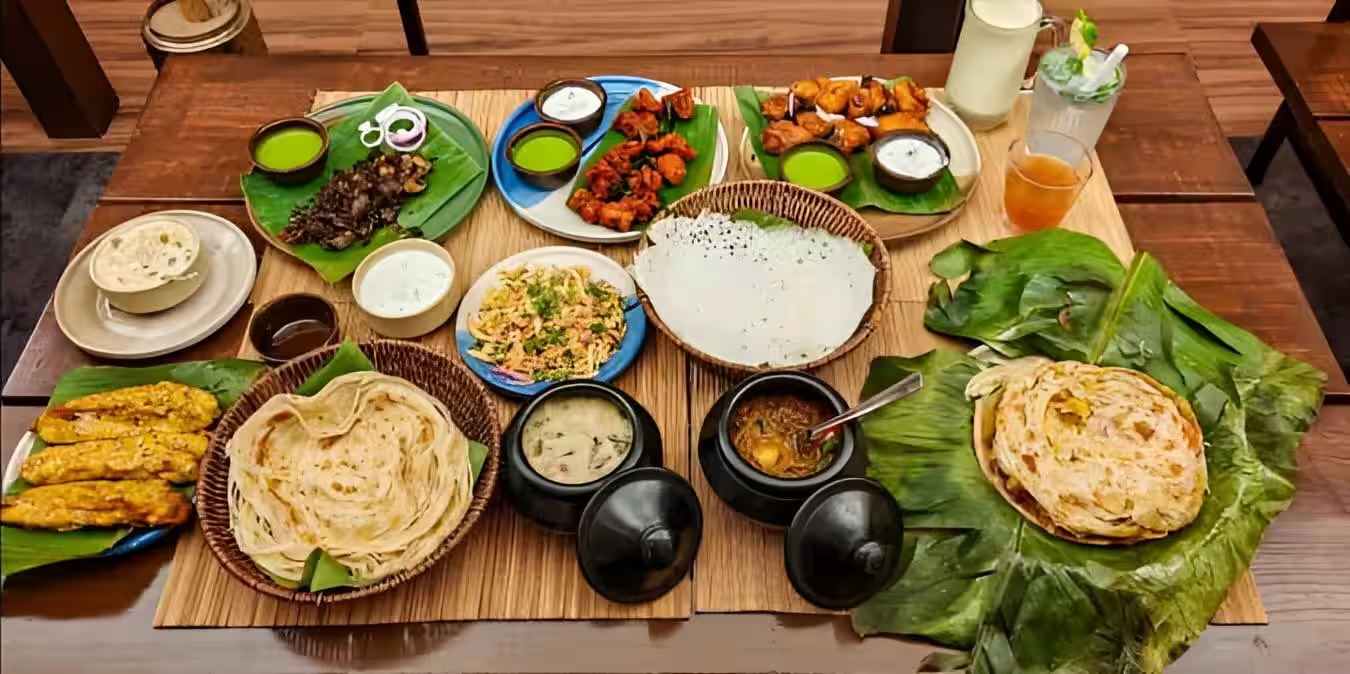
Here is a number worth sitting with: Indian restaurants that adopted digital and QR menus have reported average check values 10 to 20 percent higher than before. Not from new customers. Not from raising prices. From the same guests, at the same tables, ordering more because the menu finally did its job.
For a restaurant doing Rs. 10 lakh a month in dine in revenue, the midpoint of that range is an extra Rs. 1.5 lakh a month. Against a digital menu subscription that costs less than one table's dinner bill, the ROI question mostly answers itself. Yet across Kerala, the default is still the laminated card, reprinted every time the chef changes a price.
This post walks through where the money actually comes from, what it costs to keep doing things the old way, and a practical adoption playbook for owners who want the upside without disrupting service.
India's food services market was valued at 85 billion dollars in 2025 and is projected to reach nearly 140 billion dollars by 2030, growing above 10 percent annually. The organized segment, the chains and tech enabled independents, is growing even faster at around 15 percent annually and is expected to dominate the market. South India already holds the largest share of online food delivery in the country at over 35 percent, and in Tier 1 cities roughly 70 percent of restaurant revenue now flows through online ordering.
QR adoption followed the same curve. About a third of Indian restaurants adopted QR ordering during the pandemic, and adoption was projected to reach 80 percent shortly after. What began as a hygiene measure stayed because the unit economics turned out to be better than print.
Kerala sits in a particularly strong position inside this trend: record tourist volumes (25.8 million visits in 2025), a digitally fluent customer base where UPI is second nature, and a dining public that has already been trained by Swiggy and Zomato to browse food on a screen. The behavior shift your customers needed has already happened. The only question is whether it happens on your menu or only on an aggregator's app, where the platform takes its commission.
The check size lift is not one effect. It is four stacked effects.
Photos sell what text cannot. A guest who sees a picture of your beef ularthiyathu or a full sadya spread orders it at a rate no text description matches. Digital menus make every dish a visual pitch, and visual pitches disproportionately move your signature, higher margin items.
Friction free browsing surfaces the whole menu. On a printed card, most guests read one panel and stop. On a phone, they scroll, filter by veg or spice level, and discover the appetizers, beverages, and desserts they would never have reached. Add ons and beverages are the highest margin lines on most menus, and they are exactly what better browsing sells.
Faster turns at peak. Restaurants using QR based ordering and payment have seen table turnover improve by roughly 15 percent. In a Kerala context, peak season weekends are capacity constrained: every extra turn is pure incremental revenue on fixed costs.
Zero stale pricing. When updating a price requires a reprint, owners delay updates and quietly eat margin as input costs rise. A digital menu updated in two minutes means your prices track your costs in near real time.
Run the honest math on print. A decent laminated menu costs Rs. 150 to 400 per copy. A 60 seat restaurant needs 20 to 30 copies, replaced three or four times a year as they wear out, get stained, or go out of date, plus emergency reprints when prices change. That is Rs. 20,000 to 50,000 a year in direct cost.
The indirect costs are bigger. Every week your menu shows an old price, you absorb the difference. Every dish that is unavailable but still printed creates a disappointing "that's not available today" moment, twenty times a night. Every seasonal special that never gets added because reprinting is a hassle is revenue that never existed. The printed menu is not cheap. It is expensive in ways that never appear on one invoice.
Before anything goes digital, tighten the menu itself. Two sentence descriptions, honest spice indicators, veg and allergen tags. Digital distribution amplifies whatever menu you have, so make it worth amplifying.
You do not need a professional shoot for the full menu. Natural light, a clean banana leaf or plate, your fifteen best sellers and highest margin dishes. These photos will do more selling than any waiter.
This is where a purpose built tool earns its keep. With a platform like Menuthere, you load the menu once, generate QR codes for tables, and from then on price changes, sold out items, and festival specials are edited in minutes from a phone, reflected instantly on every table, in every language your guests read. The setup is a weekend project, not an IT initiative.
Some guests prefer paper, and that is fine. Run QR as the primary menu and keep a handful of printed copies for those who ask. You will find the printed stack shrinking on its own within a season.
A printed menu tells you nothing. A digital menu shows you what guests viewed, what they skipped, and what they ordered after looking. That is menu engineering input you have never had: promote the high margin dish everyone views but few order, fix or drop the dish nobody opens.
Close the loop. A satisfied guest holding their phone at your table is one tap away from a five star review. Reviews compound into discovery, discovery compounds into footfall.
The Indian restaurant market is consolidating around operators who run their menus like living products: priced to current costs, merchandised with photos, measurable, and updateable in minutes. The organized segment growing at 15 percent a year is the proof.
For a Kerala owner, the arithmetic is unusually kind right now. Record guest volumes, a customer base that already lives on UPI and food apps, and a documented 10 to 20 percent check lift waiting on the other side of a weekend's setup work. The restaurants that move first in each town will set the experience bar that everyone else gets compared against.
Find out what your menu could be earning. Menuthere gets your full menu digital, photographed, and on every table's QR code, with updates that take minutes instead of reprints.
Sources: Restroworks Indian Restaurant Industry Statistics, NRAI India Food Services Report 2024, Square QR payments study, Kerala Tourism arrival statistics 2025, Future Market Insights.
QR menus
The fastest way to serve faster is not hiring another server. It is removing the wait that happens before the order is even placed.
Menu strategy
Ask the internet how often a restaurant should update its menu and you get a remarkably consistent answer.