Kerala Got 25.8 Million Tourists Last Year. Most of Them Could Not Read Your Menu.
Kerala welcomed 25.8 million tourists in 2025, yet most restaurant menus speak one language. Here is how multilingual QR menus turn that traffic into revenue.
Kerala welcomed 25.8 million tourists in 2025, yet most restaurant menus speak one language. Here is how multilingual QR menus turn that traffic into revenue.
Previous article
Agentic AI lets restaurants build their own POS, kiosks, and menus at a fraction of old costs. Why the build versus buy decision is now about ownership, not code, and where each one wins.
Next article
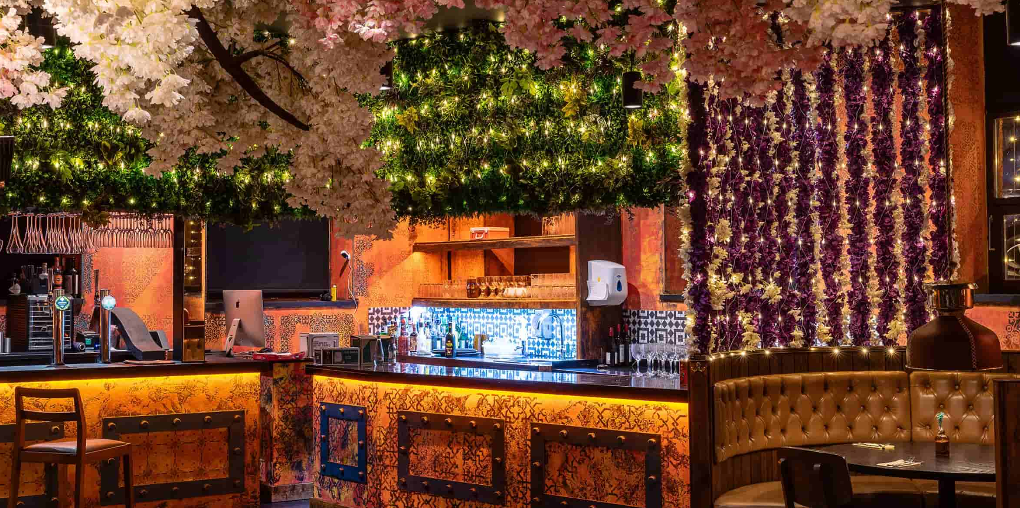
Kerala recorded 25.8 million tourist visits in 2025, the highest in the state's history. In the first nine months alone, more than 1.8 crore domestic tourists and over 5.6 lakh foreign tourists arrived, a 13 percent jump over the previous year. They came from Mumbai and Manchester, Bengaluru and Bahrain, Delhi and Dubai.
Then a large share of them sat down at a restaurant in Fort Kochi or Varkala or Kumarakom and stared at a laminated menu written for someone else.
This is the quiet revenue leak in Kerala's hospitality boom. The state has solved tourist acquisition. Individual restaurants have not solved tourist conversion, and the menu, the single highest leverage document in any restaurant, is where the conversion breaks. This post covers what the tourist surge actually looks like in numbers, why a printed single language menu caps your average bill, and a practical playbook for fixing it before the next peak season.
Kerala's tourist arrivals have set a new record every year since 2022. The 2024 figure of 22.25 million visitors was already 21 percent above pre pandemic levels, and 2025 pushed past it to 25.8 million. Foreign arrivals are recovering steadily, and the Middle East has been one of the fastest growing source markets, helped by direct flights and a massive Malayali diaspora across the Gulf.
Layer on the food angle: India's culinary tourism market is projected to grow at 15.6 percent annually through 2036, and Kerala is one of the four states leading organized culinary tourism revenue. Even abroad, the cuisine is having a moment. Datassential named Keralan cuisine one of its menu trends for 2026, with Kerala style cafes opening in the United States.
Translation for an operator: the people walking past your restaurant are more numerous, more diverse, and more food motivated than at any point in Kerala's history. The question is how many of them order confidently once they sit down.
Think about who is actually at your tables during season.
A family from Gujarat that reads Hindi and English but has never heard of kappa biriyani. A couple from France working through English as a second language. A group from Sharjah, some of whom read Arabic far more comfortably than English. A backpacker from Israel who wants to know if the curry contains shellfish. And your regulars from the neighborhood who order in Malayalam without looking at anything.
A printed menu can serve exactly one of these groups well. Everyone else does one of three things: asks the server to explain every dish (slowing your table turns at the busiest hour of the year), orders the one safe item they recognize (usually the cheapest, most familiar thing on the page), or photographs the menu and runs it through a translation app that renders "meen pollichathu" as something unhelpful.
Every one of those outcomes costs money. Indian restaurants that moved to digital and QR menus have reported 10 to 20 percent higher average check values, and restaurants using QR based ordering and payment have seen table turnover improve by around 15 percent. The mechanism is not magic. Diners who understand the menu order more, order faster, and try higher margin dishes they would otherwise skip.
The most common response to tourist confusion is the worst one: printing a second "English tourist menu" with shorter descriptions and padded prices. Tourists notice, review sites notice, and you now manage two printed documents that both go stale the moment fish prices move.
The second mistake is treating translation as a one time print job. Menus in Kerala are seasonal by nature. Karimeen availability shifts, monsoon brings different produce, Onam and festival specials come and go. Every change multiplied across three or four printed language versions is a cost that guarantees the translations are perpetually out of date.
The third mistake is assuming the server will bridge the gap. Your best staff can, but peak season is exactly when you are running with trainees and temporary hires who cannot explain twenty dishes in three languages.
Not every restaurant needs five languages. A Kovalam beach cafe likely needs English, Malayalam, Hindi, and possibly Russian or German. A Kochi restaurant near the cruise terminal needs strong English and Arabic. Spend one week asking staff to note where confused guests came from, then pick the top three or four languages that cover ninety percent of them.
"Kerala fish curry" tells a visitor nothing. "Seer fish simmered in roasted coconut and kodampuli, tangy and medium spicy, best with matta rice" sells the dish and answers the spice question before it is asked. Two sentences per dish: what it is, and what it tastes like.
Spice tolerance is the single biggest anxiety for non Keralite diners. A simple three chili scale plus veg, non veg, contains shellfish, and contains nuts markers removes the back and forth that eats server time.
This is the step that makes the first three sustainable. A printed multilingual menu is obsolete the day prices change. A digital menu platform like Menuthere lets a guest scan one QR code and read the full menu in their own language, with photos, spice indicators, and dietary filters, while you update prices, mark items unavailable, or add a festival special once and have it reflect instantly in every language. No reprints, no version drift, no separate tourist menu.
A photo does what no translation can. Visual menus are part of why digital menus lift check sizes: a picture of a full sadya or a sizzling pollichathu converts hesitant browsers into orders of your signature, higher margin items.
Tourists are your highest propensity reviewers, and reviews are how the next wave of tourists picks you. End the digital menu journey with a one tap link to your Google profile. A season of systematically captured reviews compounds into next season's footfall.
Kerala's tourism flywheel is spinning faster every year, and the state government is investing to push it toward 2030 targets. The demand side of the equation has been handed to you. The restaurants that win the next three seasons will be the ones that remove every point of friction between a curious visitor and a confident order, and the menu is friction point number one.
The fix is not a bigger marketing budget. It is making sure the 25 million people already walking past your door can read what you serve, in their language, with a photo, on their own phone.
Make your menu speak every guest's language. Menuthere turns your menu into a multilingual digital menu your guests open with one scan, and you update in minutes without ever reprinting.
Sources: Kerala Tourism arrival statistics 2024 and 2025, Deshabhimani, TravelMedia.in, Gulf News, Future Market Insights India Culinary Tourism Report, Restroworks Indian Restaurant Industry Statistics, Datassential 2026 menu trends via Restaurant Business Online, Square QR payments study.
Indian restaurants report 10 to 20 percent higher average bills after switching to digital menus. Here is the ROI math for Kerala restaurant owners, line by line.
QR menus
The fastest way to serve faster is not hiring another server. It is removing the wait that happens before the order is even placed.
QR menus
Combo meals are a discount you pre-pay to guests who were buying both items anyway. Here is why a pairing map lifts average order value without giving up margin.