Rain Doubles Your Delivery Time. Your Menu Doesn't Know That.
Your delivery menu was designed for a 30 minute ride. In monsoon it is a 70 minute ride. The dishes did not change, so the customer blames the food.
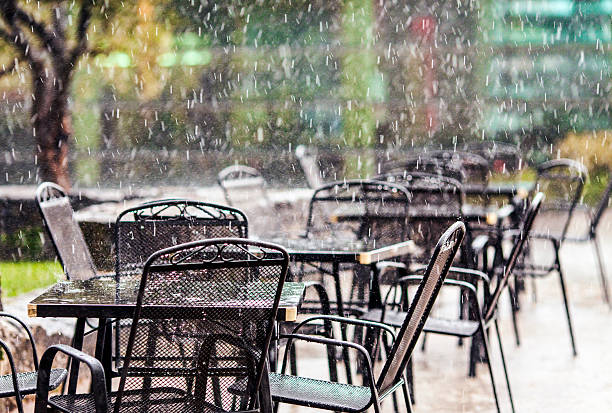
It starts raining at 7:40pm.
Within twenty minutes, three things happen at once. Orders spike, because nobody wants to go out. Riders drop off, because nobody wants to be out. And your delivery time goes from 32 minutes to 70.
Every variable in your delivery business just moved.
Your menu did not move at all.
The problem in one sentence
Delivery menus are designed around a ride that takes half an hour.
That is not a guess. It is how the industry actually works. Dishes get <cite index="39-1">tested for travel time, packaging compatibility and consistency after 20 to 30 minutes in transit, and if a dish loses texture, temperature or presentation, it does not make the menu</cite>.
Fine. Now put that same dish in a seventy minute ride, in humidity, in a bag on the back of a bike in the rain.
<cite index="39-1">Crispy items turn soggy. Fried food loses its appeal quickly. Heat loss changes taste perception, and lukewarm food feels less fresh</cite>. It is not even really the rider's fault, because <cite index="43-1">hot food releases steam, and in a sealed container that steam condenses and settles back onto the food</cite>. Give it forty extra minutes and physics does the rest.
The customer opens the box at 8:55pm and sees a limp dosa.
They do not think about the weather. They think your dosa is bad.
And in Kerala this is not an edge case
The southwest monsoon runs June through September. The northeast monsoon follows from October into December. Put those together and a Kerala restaurant is operating in rain, on and off, across roughly half the year.
That is not a bad week to get through. It is an operating mode, and most restaurants have no version of the menu built for it.
Meanwhile the aggregator makes your food more expensive
Here is the part that costs you money without appearing anywhere in your accounts.
When it rains, platforms switch into rain mode. A Swiggy representative described the mechanism plainly: <cite index="27-1">fleet managers on the ground report genuine rain, the platform switches to rain mode, surge charges are added for customers and a surge bonus is given to the delivery executive</cite>. During one Hyderabad monsoon, <cite index="27-1">a customer ordering from four to seven kilometres away paid a minimum surge fee of Rs 20 on top of a Rs 40 delivery fee, rising further with distance and weather</cite>.
So on the rainiest evening of the month, when demand for your food is at its highest, the total your customer pays goes up and you receive exactly none of the increase.
Your food got slower, arrived worse, and cost them more. All three of those attach to your name.
The opportunity nobody uses
Now flip it, because there is a genuinely good thing hiding in here.
Rain is the single best direct ordering window of your year.
Demand is peaking. And the surge fee is a visible line on the customer's bill, which means this is the one moment when they are actively looking at what the platform costs them. Your own ordering channel has no surge line on it. The gap between your price and the platform's price is at its widest and its most obvious, on the night the most people are ordering.
If you are ever going to convert someone from an aggregator to your own WhatsApp or ordering link, it is a wet Tuesday in July, not a dry one.
What to actually do
1. Make the list. Two columns.
Sit down for twenty minutes and split your delivery menu into what survives a seventy minute ride and what does not.
Things that travel: <cite index="39-1">rice bowls, wraps, biryani, thalis, pasta and noodles, because they hold shape, retain heat and stay consistent</cite>. Gravies. Curries. Most things that are already wet.
Things that do not: anything crisp. Dosa, appam, vada, papad, fried chicken, anything with a separate crunchy element, anything with ice cream in it. <cite index="41-1">Fried and breaded foods emit moisture after cooking, and in a travel container the steam accumulates and they lose their crispy texture</cite>.
You already know most of this. Almost nobody has written it down as a list.
2. When the rain is heavy, pause the fragile items
This is the whole intervention and it takes one tap.
Do not sell a dosa into a seventy minute ride. It will come back as a one star review that lives on your listing long after the weather clears. Take it off delivery for two hours, keep it on dine in, put it back when the rain stops.
You are not losing that order. You are losing a bad version of that order.
3. Push the travel proof items forward instead
Same evening, opposite move. Bring the biryani, the curries, the rice bowls to the top of the menu. Suggest them first. They arrive at seventy minutes almost exactly as they left, and they are usually your better margin items anyway.
4. Shorten the menu when the kitchen and the roads are both stretched
Rain is not the night to run all eighty items. Fewer dishes means faster tickets, which claws back some of the minutes the weather is taking.
5. Fix the packaging on the items that stay
Vent the steam. Separate anything wet from anything crisp. Chutney and sambar in their own containers, never touching the thing they will destroy. This costs a little more per order and saves the review.
6. Put your link in the bag
On surge nights, print or sticker your direct ordering link on the packaging. The customer who just paid a Rs 20 surge fee is the most receptive audience you will ever get, and they are holding your bag.
The bottom line
Restaurants treat monsoon as weather. Something that happens to you, that you get through, that ends.
For a delivery business it is not weather. It is a different set of operating conditions that lasts months, in which your ride time doubles, your food quality drops through no fault of your kitchen, and a platform quietly raises your effective price to the customer.
Everything about the night changes. The menu is the only thing that stays exactly where it was.
It does not need to. Pausing four fragile items and promoting four sturdy ones takes about a minute and protects the ratings you will still be carrying in November.
Give your menu a rain mode. Menuthere lets you take items off instantly across every channel and bring them back just as fast, so a heavy hour does not cost you a review.
Sources: Restaurant India (delivery menu design and travel testing), Deccan Chronicle (Swiggy rain mode and surge fees), Alfa Foil and HuffPost (steam, condensation and fried food in transit).