Full service restaurant visits rose about 5 percent year over year in late 2025. Fast casual rose about 3 percent. A few years ago that gap ran the other way, and it ran hard. Fast casual was the segment doubling in size while full service fought to hold flat. The order has flipped, and the flip is telling you something more useful than "casual dining is back."
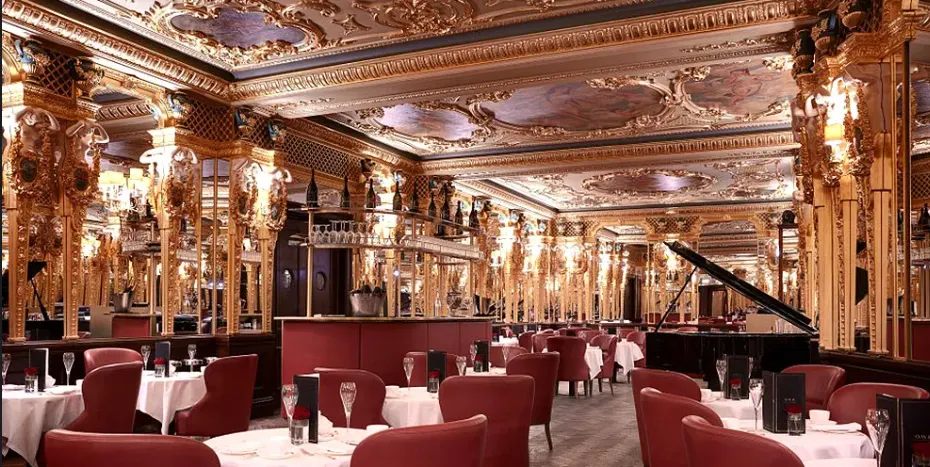
Here is the part that gets misread. This is not a story about one segment beating another. It is a story about what happens to every segment when price stops being a differentiator. Pricing across fast casual, QSR, and casual dining has converged around the $10 to $12 mark. When everybody is fighting at the same price point, the thing that decides the visit is no longer the price. It is whether the meal feels worth it. Casual dining is winning that question right now. The reason it is winning is the actual lesson.
The data: a segment reshuffle, not a collapse
Fast casual did not crater. It cooled. Traffic growth slid from about 3.3 percent in December 2024 to roughly 1.7 percent by October 2025. The boom decelerated as the segment hit maturity after roughly doubling over the past decade, according to Technomic's read on 2026 trends.
Meanwhile casual dining staged the comeback nobody expected three years ago. Chili's has led the publicly traded casual dining sector in comparable sales quarter after quarter since 2024, built on a value play that put a $10 price point in direct competition with fast food. Applebee's followed with a Two for $25 deal that ended a multi year sales slide. QSR, for its part, has been catching up to fast casual on customer visits by leaning into aggressive value and limited time deals.
The throughline: the segments that pushed hard, credible value won traffic. The segment that let its check drift up without adding to the experience lost it.
Why it's happening: the check crept up, the experience didn't
Years of price increases pushed the average fast casual check into a band where guests started doing a side by side comparison they never used to make. A craveable QSR meal on one side. A full service experience with table service, a dining room, and a happy hour on the other. A fast casual bowl at $15 to $20 sitting awkwardly in the middle, costing nearly as much as the sit down option without the experience that justifies sitting down.
That is the squeeze. Fast casual occupied a sweet spot for a decade because it offered close to full service quality at clearly better than full service prices. When the price advantage eroded, the value proposition eroded with it, and there was no experience layer underneath to catch the fall.
Casual dining had that layer all along. It just needed to fix its price perception, which the value deals did. Once a Chili's meal competes with fast food on price, the table service and the atmosphere stop being a luxury and start being a free upgrade. That is a powerful place to be.
Where operators go wrong
The instinctive response to this environment is to chase price down. Cut the entree, run the discount, match the deal. Sometimes that is right. But traffic growth across the whole industry is expected to stay below 1 percent in 2026, which means this is a market share game, not a rising tide. You are not trying to ride growth. You are trying to take a visit from someone else.
Discounting alone does not win a share game, because everyone can discount. What wins is making the guest feel the value before they have spent a dollar, at the exact moment they are deciding whether your place is worth it. That decision does not happen at the register. It happens when they look at your menu.
The perceived value playbook for a converged price market
1. Lead with value where the guest actually looks
If you have a strong value offer, it cannot be buried on page three or trapped in a separate insert. The guest decides in the first few seconds of looking. Put the deal, the combo, the happy hour where their eyes land first. Perceived value is a layout problem before it is a pricing problem.
2. Justify every price with what surrounds it
A $16 entree feels expensive next to a price. It feels fair next to a description that signals quality, portion, and care. The same number reads completely differently depending on what is around it. This is the cheapest lever you have, and most operators never pull it.
3. Make value time aware
Happy hour, lunch specials, and daypart pricing are some of casual dining's sharpest weapons right now. They only work if the guest sees the right offer at the right time. A menu that shows the same thing at 11 a.m. and 4 p.m. is leaving the most effective value tool in the industry switched off for half the day. A digital menu platform like Menuthere lets you switch offers and pricing by daypart automatically, so the value the guest sees always matches the moment they are in. That is the experience layer fast casual forgot to build.
4. Merchandise the experience, not just the food
Casual dining is winning partly on ambiance and service, things fast casual stripped out. You may not have a dining room to sell, but you have a story to tell about your food, your sourcing, your specialties. The menu is where that story either gets told or gets lost. Treat it as a sales surface, not a price list.
5. Protect accuracy, because a wrong or stale offer destroys value instantly
Nothing kills perceived value faster than a menu advertising a deal you no longer run or an item you are out of. In a share game, one broken promise sends the guest to the competitor next door. Keep the menu current to the hour, not the print cycle.
6. Measure what the menu sells, then adjust
The operators winning this market treat the menu as something they tune, not something they laminate once a year. Watch what moves, reposition what does not, and keep editing toward the items that carry both margin and appeal.
The bottom line
The casual dining comeback is easy to misread as a swing of the pendulum, here today and gone next cycle. It is actually a permanent shift in what the guest is deciding. When price converges across every segment, price stops doing the persuading. Perceived value takes over, and perceived value is manufactured at the point of decision, on the surface the guest is looking at when they choose you or the place next door.
Fast casual lost ground because it let the price climb past the experience. Casual dining took ground because it fixed the price and already had the experience. Most independent operators sit somewhere in the middle, and the middle is exactly where the menu does the most work. You probably cannot out spend the chains on deals. You can out present them on value.
See how Menuthere turns your menu into a value surface that switches by daypart, merchandises your best items, and earns the visit before the guest ever spends a dollar.
Sources: Restaurant Dive (same store sales tracker and bifurcated performance, March 2026); Black Box Intelligence (segment traffic data, 2025 and 2026); Technomic 2026 U.S. Foodservice Trends; Consumer Edge cohort analysis; Revenue Management Solutions Q4 usage survey; Placer.ai (2026 value and precision outlook).